
Detailed Explanation of MOCVD
MOCVD is the abbreviation of Metal-organic Chemical Vapor Deposition.

MOCVD is a novel vapor phase epitaxial growth technology developed based on vapor phase epitaxy (VPE). This technology originated in 1968, when Manasevit et al. of Rockaway Corporation in the United States proposed it. After nearly 20 years of rapid development, MOCVD has become one of the key technologies for preparing semiconductor compound materials.
In MOCVD, ultrapure gases are injected into a reactor and carefully metered to deposit very thin atomic layers onto semiconductor wafers. Surface reactions of organic compounds or metal-organic compounds containing the desired chemical elements and hydrides create the conditions for crystal growth, forming the epitaxial growth of materials and compound semiconductors.
The MOCVD equipment mixes group II or III metal organic compounds with hydrides of group V or VI elements and introduces them into the reaction chamber. When the mixed gas flows through the heated substrate surface, a thermal decomposition reaction occurs on the substrate surface and epitaxial growth occurs into a compound single crystal film.
Specifically, the MOCVD process principle includes the following steps:
Carrier gas injection: Ultrapure gas is injected into the reactor to serve as a carrier for the metal organic compound.
Thermal decomposition reaction: Under high temperature conditions, metal organic compounds decompose into atoms or molecules.
Surface reaction: The decomposed atoms or molecules react with the substrate surface to form the desired compound semiconductor film.
Chemical vapor deposition: Controlling the growth rate and quality of thin films by controlling reaction conditions such as temperature and gas flow.
During the MOCVD process, the heat generated by the chemical reaction causes the organometallic compound to decompose into atoms or molecules under the action of the carrier gas. These atoms and molecules then react with the substrate surface to form the desired compound or single crystal film. This process controls the crystal growth process through gas phase mass transfer, diffusion, and surface reactions.
It is important to note that the specific MOCVD process principles may vary depending on the material system and growth conditions. In practical applications, it is necessary to select appropriate growth conditions and process parameters based on specific needs to obtain high-quality compound semiconductor films.
The Group II and Group III organic compounds used in MOCVD primarily include metal organic compounds, such as diethylzinc, dimethylaluminum, and dimethylgallium. These compounds react with Group V and Group VI hydrides during the MOCVD process to produce the desired compound semiconductor films. Specifically, some common Group II and Group III organic compounds include:
Diethylzinc (Zn(C2H5)2): Used in MOCVD to prepare II-VI compound semiconductor films such as ZnO and ZnS.
Dimethylaluminum (Al(CH3)3): Used in MOCVD to prepare III-V compound semiconductor films such as AlN and AlGaN.
Dimethylgallium (Ga(CH3)3): Used in MOCVD to prepare III-V compound semiconductor films such as GaN and GaAs.
The Group V and Group VI elements used in MOCVD primarily include nitrogen (N), phosphorus (P), arsenic (As), antimony (Sb), and bismuth (Bi). These elements react with Group II and Group III organic compounds during the MOCVD process to form the desired compound semiconductor films. Some common Group V and Group VI elements include:
Nitrogen (N): Used in MOCVD to prepare nitride semiconductor films such as GaN and AlN.
Phosphorus (P): Used in MOCVD to prepare phosphide semiconductor films such as GaP and AlP.
砷(As): Used in MOCVD to prepare arsenide semiconductor films such as GaAs and AlAs.
Antimony (Sb): Used in MOCVD to prepare antimonide semiconductor films such as InSb and GaSb.
Bi: Used in MOCVD to prepare bismuth-containing semiconductor films such as InBi and GaBi.
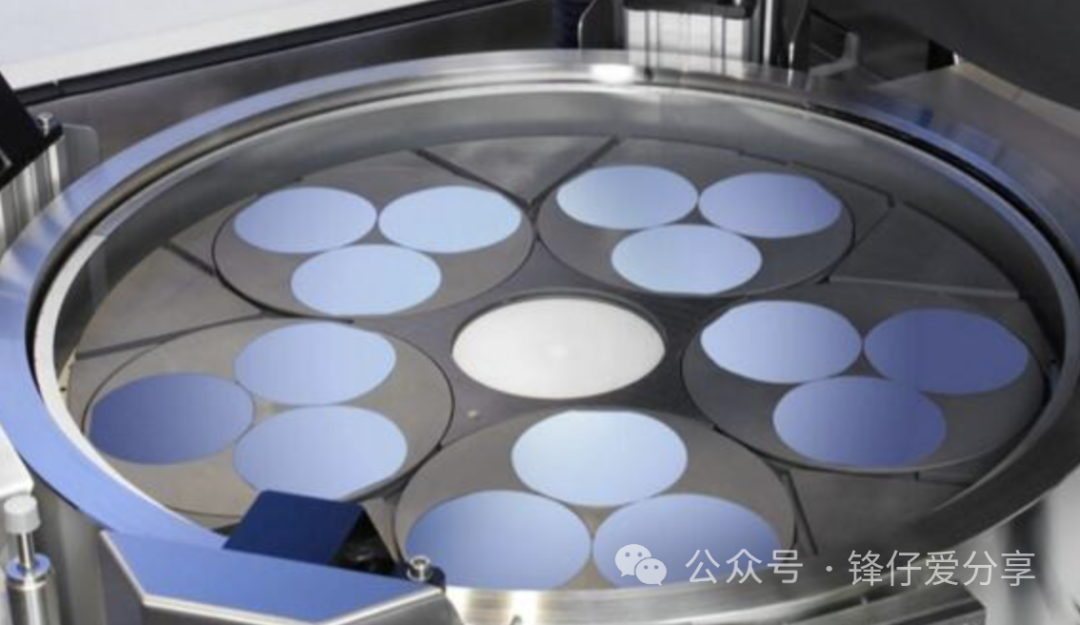
MOCVD technology is widely used in many fields, including but not limited to the following:
Semiconductor field:MOCVD technology plays an important role in the preparation of semiconductor devices and can be used to prepare various functional thin film materials, such as nitrides, phosphides and oxides.
Optoelectronics: MOCVD technology can be used to prepare various optoelectronic devices, such as LEDs, lasers, etc. The devices prepared have the characteristics of high brightness and high efficiency.
Photovoltaic field: MOCVD technology can be used to prepare high-efficiency solar cells and improve photoelectric conversion efficiency and light stability.
Display area: MOCVD technology can be used to prepare various display devices, such as OLED, to improve the quality and life of the display.
MOCVD technology has been widely used in many fields and is expected to promote the development of related fields.
Based on current trends and technological developments, some reasonable speculations about the future development of MOCVD are made:
More efficient thin film growthWith the advancement of technology, MOCVD technology may achieve greater breakthroughs in thin film growth. In the future, MOCVD may achieve more efficient thin film growth, thereby improving production efficiency and product quality.
Wider application areasCurrently, MOCVD technology has a wide range of applications, including LEDs, solar cells, and lasers. In the future, with the continuous advancement of technology, the application areas of MOCVD technology may further expand, for example, to optoelectronic devices, biomedicine, and other fields.
A more environmentally friendly processWith increasing environmental awareness, people are paying more and more attention to environmental issues in the production process. In the future, MOCVD technology may further develop in a more environmentally friendly and sustainable direction, reducing its impact on the environment.
More intelligent and automated equipment: With the rise of Industry 4.0 and smart manufacturing, future MOCVD equipment may become more intelligent and automated, improving production efficiency and product quality.
More customized products: With the increase in personalized needs, future MOCVD products may be more customized to meet the needs of different customers.
These are just some speculations about the future development of MOCVD. The actual situation may be different. In the future, we need to continue to pay attention to the dynamics of scientific and technological development and continuously improve and optimize MOCVD technology and equipment according to market demand and technological progress.
Please enter the content you want to describe to supplement the content. Please enter the content you want to describe to supplement the content. Please enter the content you want to describe to supplement the content. Please enter the content you want to describe to supplement the content. Please enter the content you want to describe to supplement the content.



友情链接:西安电子大学芜湖研究院 hpmc manufacturer